
Independent publishing with eternal purpose
Words that steady the heart and stay with you.
CHRS Publishing creates faith-rooted books that deepen spiritual growth, preserve hard-won wisdom, and carry hope from one generation to the next.
04Featured titles
FaithRooted in purpose
CHRSAuthor-led press
The CHRS bookshelf
Find the book for this season.
Search by title, browse by collection, then choose the format that works for you.
Bestseller
Faith & spiritual growth
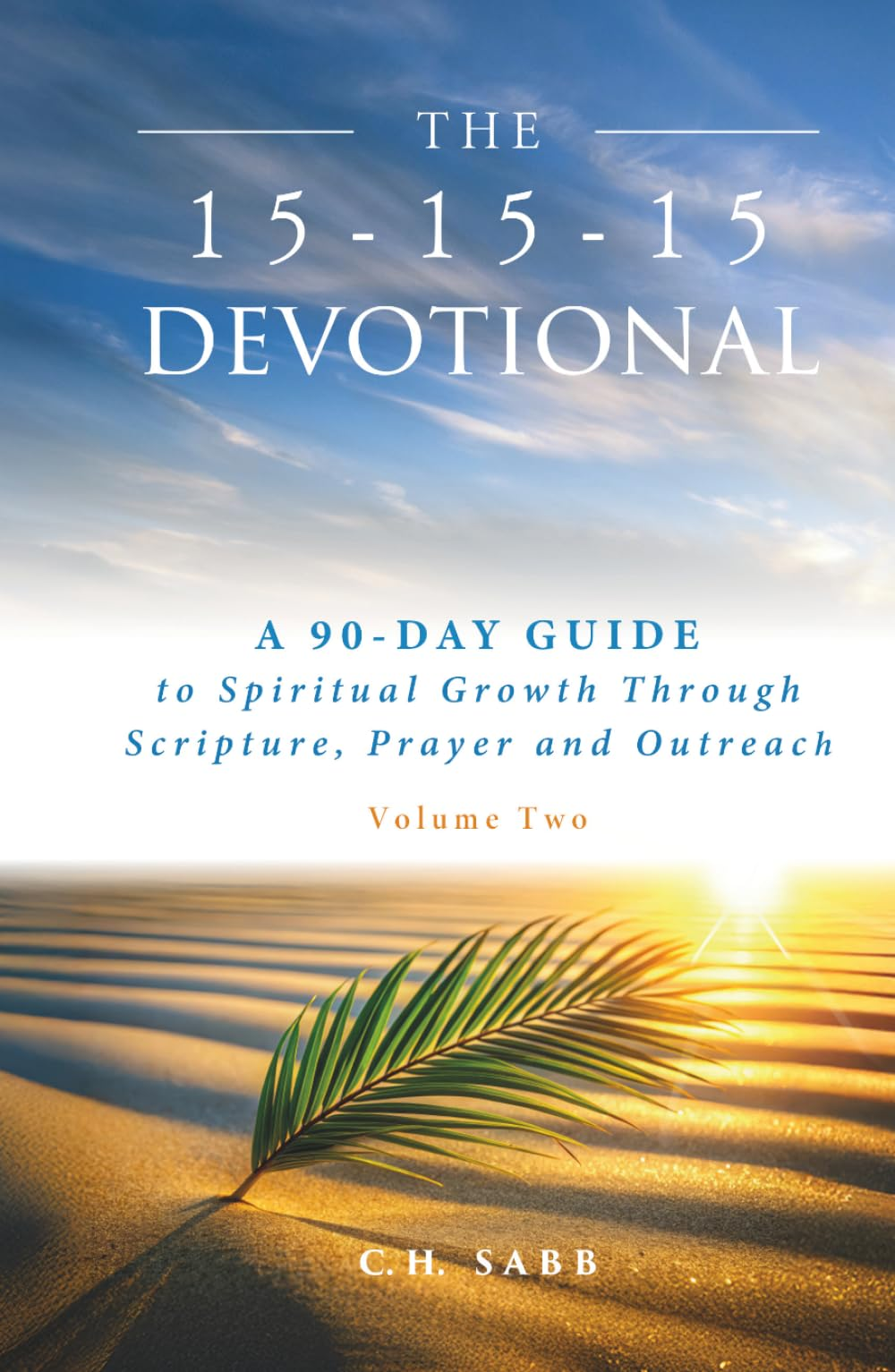
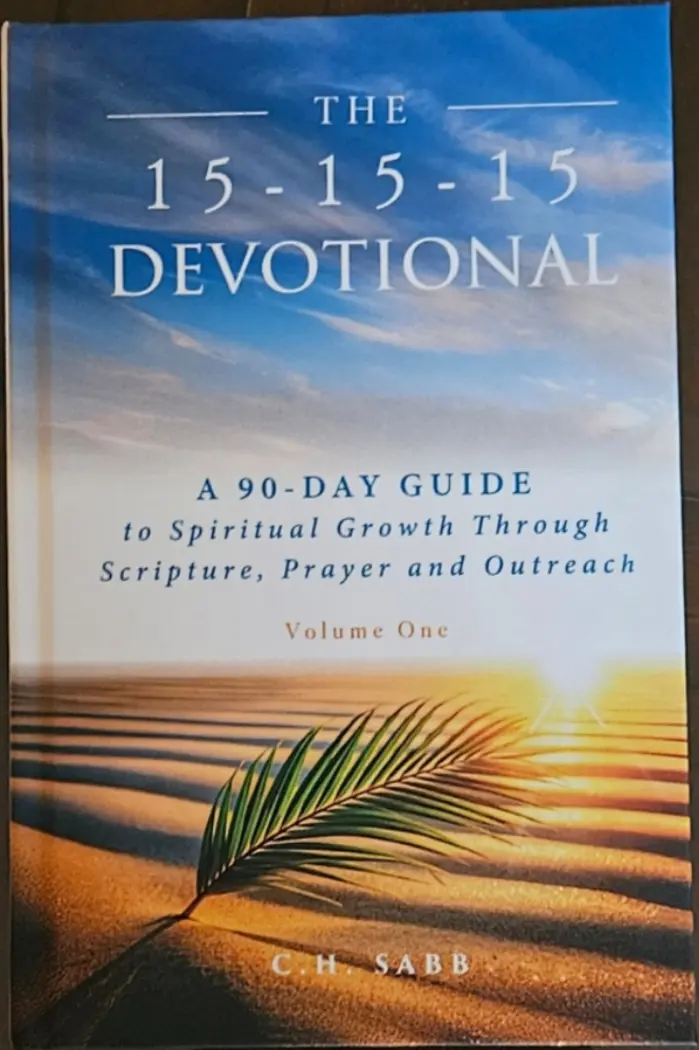
The 15-15-15 Devotional
Volume One · 90-day guide
A practical rhythm of Scripture, prayer, and outreach designed to help faith move beyond reading and into daily life.
Inside: 90 days of Bible reading, guided prayer, personal reflection, self-examination, and simple outreach actions.
AuthorC. H. Sabb
PublisherCHRS Publishing LLC
Reader reviews
“Over 90 days, I felt myself growing closer to God, more confident in prayer, and bolder in sharing kindness with others.”
Verified Amazon Reader
“I loved the outreach challenges. What a great idea and a way to emphasize the importance of practicing our faith.”
Verified Amazon Reader
Volume Two
Faith & spiritual growth
The 15-15-15 Devotional
Volume Two · 90-day guide
A fresh ninety-day journey that keeps Scripture, prayer, and compassionate action working together in a steady daily practice.
Built for consistency: Read, reflect, pray, examine, and reach outward—fifteen focused minutes at a time.
Paperback ISBN979-8-9957278-2-8
Hardcover ISBN979-8-9957278-3-5
Reader review
Inspiring and amazing
Reading this book has truly been the highlight of my day. It is such an amazing and inspiring book, and it has already taught me so much.
One of the biggest lessons I’ve taken away is the importance of patience and trusting that God works on His time, not ours. I’ve learned to be patient, have faith, and trust that God will come through for us, even when we may not understand His plan in the moment.
Looking back, I can truly see that God has come through many times for my family and I.
I highly recommend this book to anyone who needs a reminder to have faith, trust the process, and believe that everything will happen in God’s perfect timing. I hope everyone gets a copy of this book because it will change your life. Great job to the author!
rosa D · Verified Purchase on Amazon · Paperback
Reviewed in the United States on September 30, 2026
Reader favorite
Memoir & Jamaican culture
Mama Said a Mouthful
Ignore at Your Own Risk
Real-life stories built around the sharp, sweet, unforgettable proverbs of a wise Jamaican mother.
In these pages: Jamaican sayings unfold through personal stories, reflection, family memory, humor, and lessons that still speak today.
AuthorC. H. Sabb
Length116 pages
Reader review
“This book was absolutely wonderful. It brought back so many memories that I had with my mom. She would say these exact things in Italian.”
Verified Amazon Reader
Practical wellness
Personal growth & wellness
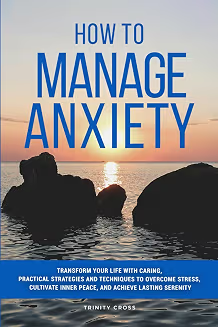
How to Manage Anxiety
Caring, practical strategies
A compassionate, approachable guide for understanding anxious thoughts, reducing stress, and cultivating greater calm in everyday life.
Practical and compassionate: A guide to recognizing anxious patterns, building steadier routines, and moving toward peace without clinical language or judgment.
AuthorTrinity Cross
Author notePublished under a pen name
PublisherCHRS Publishing LLC
Reader reviews
“The book is packed with strategies that are easy to understand and apply to my daily life.”
Verified Amazon Reader
“The writing is warm, clear, and based in solid research, yet never feels clinical.”
Verified Amazon Reader
No books match that search. Try “faith,” “Jamaica,” “prayer,” or “anxiety.”
Day 64
Worry Is a Choice
Bible Reading 15 Minutes
Primary Passage: Philippians 4:6 – “Be careful for nothing; but in every thing by prayer and supplication with thanksgiving let your requests be made known unto God.”
Further Reading (Optional):
- Matthew 6:27 – Worry accomplishes nothing.
- 1 Peter 5:7 – Cast all your cares on Him.
- Proverbs 12:25 – Anxiety weighs the heart down.
- Psalm 56:3 – Trust in God when afraid.
Reflection
Worry is a choice, and so is trusting God. When we worry, we allow fear, doubt, and anxiety to take control. But God calls us to a life of faith, not fear.
Jesus said, “Which of you by taking thought can add one cubit unto his stature?” (Matthew 6:27). Worry changes nothing except our peace of mind. It distracts us from God, weakens our faith, steals our joy, and leads to poor decisions. Instead of trusting God’s promises, we dwell on “what ifs.”
The Bible gives us examples of those who worried—like Gideon, Martha, and the Israelites—and those who chose faith, like Daniel, David, and Paul. Those who trusted God saw His power at work. Those who let worry control them often missed out on His blessings.
When we worry, we tell God, “I don’t trust You to handle this.” But when we surrender our concerns to Him, we free ourselves to live in faith. No matter the situation, God is always in control. Will we worry, or will we trust?
Prayer · 15 Minutes
Prayer Focus
- Ask God to help you release your worries.
- Pray for faith to trust Him fully.
Pray
Guided Prayer
Lord, I confess that I sometimes hold onto worry instead of giving it to You. Help me to trust You completely, knowing that You are in control. Remind me that my anxieties are nothing in comparison to Your power. Replace my fear with faith and my worry with peace. In Jesus’ name, Amen.
Outreach · 15 Minutes
Action Steps
- Write down your top three worries and surrender them to God in prayer.
- Encourage someone who is struggling with anxiety by sharing a verse of hope.
Key Takeaway
Worry adds nothing to our lives—only stress and doubt. Trusting God, however, brings peace. Let go of worry and let God be in control.
Ready to continue?
Build a steady rhythm of faith and action.
Buy Volume One on Amazon
Day 1
Serving the Living God
Bible Reading 15 Minutes
Primary Scripture: Job 19:25–27
Further Reading (Optional): 1 Kings 18:20–39; Acts 17:22–31
Reflection
There are times when life’s struggles make us question God’s presence. In the darkest moments, doubt whispers, Where is God? Does He see? Does He care? But no matter how things appear, our God is alive! Job, in the midst of his suffering, boldly declared, “For I know that my redeemer liveth” (Job 19:25). He had lost everything—his health, wealth, and even the support of friends and family—but he still clung to the truth that God was real, present, and in control.
Elijah proved this on Mount Carmel when he challenged the prophets of Baal. They called on their false god, but received no answer, while Elijah prayed, and the living God responded with fire. Paul preached the same truth to the people of Athens, revealing that the unknown God they sought was the true, living God (Acts 17:24–25).
I’ve seen this truth in my own life. Five months ago, I walked away from my job with no backup plan. It wasn’t the “common sense” thing to do, but I had to leave. Since then, I have been searching, waiting on God’s next step. And yet, I have never been without. My bills are paid, my needs are met, and I am still standing, not by my own strength, but because He keeps me. Could a dead god do that?
No matter what you are facing today, remember: You serve a living God. He sees you, He knows your needs, and He will not fail you. Even when the way seems unclear, trust Him, because He is alive, and He is at work.
Prayer · 15 Minutes
Prayer Focus
- Thank God for His faithfulness and provision
- Ask the Lord to strengthen your faith during uncertain seasons
- Surrender fear, doubt, and worry to God
- Trust God’s timing and direction for your life
Pray
Guided Prayer
Heavenly Father, thank You, Lord, that You are alive and active in my life. When doubt creeps in, remind me that You are near, even when I can’t see the way ahead. Strengthen my faith and help me trust that Your perfect timing is at work. In Jesus’ name, Amen.
Outreach · 15 Minutes
Action Steps
- Encourage someone today who may be struggling with doubt.
- Share a testimony of how God has provided for you.
- Remind someone that God is alive and faithful.
Reflect
Self-Examination Questions
- Do I truly live each day as though I serve the Living God?
- When difficulties arise, do I trust that God is alive, present, and working on my behalf?
- Have I allowed fear or doubt to overshadow what God has already done?
- What area of my life do I need to surrender fully to God today?
Key Takeaway
God is alive. He sees, He provides, and He is working even when we can’t see it.
Ready to continue?
Begin the full ninety-day journey.
Buy Volume Two on Amazon
Chapter 25
Too Much a One Ting Good fi Nutten
Mama Said “Too Much a One Ting Good fi Nutten.”
Translation Too much of even a good thing can lose its goodness.
Meaning
Even the sweetest things lose their charm when taken in excess. Mama believed in balance, whether it was food, fun, or freedom. What begins as a treat can quickly turn into a punishment when we lose control. This saying reminds us that anything, no matter how good, can become burdensome if not handled wisely.
Mama had baked a sweet potato pudding for her school vending the next day, but temptation got the better of us. This wasn’t a one-time event; Mama baked often, and we knew the process well. But on this particular night, she was in a rush to get to night service at our church, about a mile from home. She pulled the pudding from the oven, still hot, and quickly hurried out the door, leaving our older cousin Ray in charge.
Normally, we would have gone with her, but it was a school night, and service often ran late. Some time passed, and Ray decided to cut himself a slice of the warm, sweet goodness. When my older siblings asked him for a piece, he told them no. That was all it took.
Now, usually, Mama let the pudding cool before removing it from the container; it needed time to set, to come out whole and smooth. But none of us were willing to wait. One by one, each child took turns sticking their fingers into the warm top and scooping out what they could. It was still warm, so the moment they touched it, they’d flash their fingers and cry out, “Hot and sweet!” Pudding flew everywhere, on the walls, the floor, the furniture, and the table, a full mess.
Eventually, the entire warm top was gone. That’s when panic set in. Someone had the “bright” idea of flipping the pudding upside down in the container to hide the damage. And somehow, we managed it. Then everyone ran off to bed, hoping that sleep would wipe the slate clean.
But Mama wasn’t fooled. She walked into the house and noticed that every step she took landed in something sticky. She turned on the light and followed the trail, which led straight to the table. There sat her sweet potato pudding, upside down in the container. She asked what happened. We told the truth: Ray cut it but wouldn’t share, so we helped ourselves. Mama asked, “Then why didn’t you just cut it like Ray?” We had no answer.
And Mama, every bit as wise as she was quiet, didn’t raise her voice. No shouting. No beating. Just six calm words before every meal: “Puddin you want, puddin you get.”
And for three days, we had sweet potato pudding, morning, noon, and night. By the end of the first day, the pudding had lost all appeal, but Mama didn’t waver. We ate it until the last bite was gone. Sweet potato pudding never looked the same again, but the lesson stayed with us.
Lesson
Desire without discipline leads to disaster, even when it’s something good. What started out as sweet quickly became sour, not because the pudding changed, but because we refused to wait. We let craving lead us instead of character, and in the end, we learned the hard way: too much, even of a good thing, isn’t good at all.
Mama didn’t scold. She didn’t shout. She simply let us taste the lesson. For three days straight, pudding greeted us at every meal, morning, noon, and night. And by the final spoonful, we weren’t craving it anymore. We were cured. Sometimes, the most effective discipline doesn’t come from harsh punishment, but from steady patience and a whole lot of what you thought you wanted. Because when you’ve had too much of one thing, you’ll remember the taste long after it’s gone.
Enjoyed Mama’s lesson?
Discover all 26 stories in the book.
Buy the book on Amazon
Section 1.2
Identifying Your Anxiety Triggers: A Personalized Approach
To start managing your anxious thoughts and moments, you must first understand what to look for. One of the steps necessary to do so is identifying what causes the initial reaction or trigger. It could be a specific situation, people, places, or even thoughts that prompt these symptoms. For example, a person might feel anxious when faced with a public speaking event, encountering crowded spaces, or even thinking about past traumatic experiences. When you recognize this needful first step, you will be well on your way toward developing strategies to cope with and reduce these triggers.
Let us look at an example: You are standing in a busy supermarket, the aisles filled with people, the overhead lights glaring down, and an uproar of sounds swirling around you. Suddenly, your heart begins to race, your palms to sweat, and with it, an overwhelming urge to escape. This could be a trigger for some, while others remain entirely unconcerned. What caused some people to appear almost indifferent, while others seem close to a breakdown, often lies in personal triggers—the specific situations or stimuli that set off your anxiety. Understanding and recognizing these triggers is a pivotal step in managing anxiety effectively.
One method to do this is to keep an anxiety journal. By jotting down your thoughts and feelings when this unease strikes, you can identify patterns over time, noting situations that lead to heightened anxiety, and pinpoint patterns of specific triggers. Keep your journal close and make it a habit to write even small observations. What emerges may surprise you. You may find that social gatherings or tight deadlines constantly cause anxious feelings. As you write down your observations, you can handle triggers as they appear, thus offering clarity and a starting point for change.
Mindfulness exercises can further help to recognize triggers. Mishra (2024) states, “Mindfulness is the practice of being fully present and engaged at the moment, aware of your thoughts and feelings without judging them.” By practicing mindfulness, you cultivate awareness of your present-moment experiences, including thoughts and bodily sensations. Try starting with just five minutes a day. You will be pleasantly surprised at first to notice these small changes in your awareness and, second, how you respond to these triggers. Such heightened awareness helps you detect anxious behaviors as they arise rather than reacting to them unconsciously. It is like turning on a light in a dark room; it illuminates the hidden corners of your mind. As you practice mindfulness, you may realize that specific thoughts, like self-critical inner dialogue, are internal triggers that ignite your anxiety.
Everyone experiences self-doubt; however, negative self-talk, from time to time, telling yourself you’re not good enough or predicting failure, can spiral into anxiety if left unchecked. On the other hand, external triggers, such as crowded places or noisy environments, might also play a part. The internal triggers originate in your mind—negative thoughts or memories. The external triggers are those that come from the outside, such as specific situations or environmental stimuli. When you can differentiate between the two, you gain the empowerment necessary to address them separately. As you do, you can effectively tailor your strategies to suit each.
Self-awareness acts as the foundation of this process. In order to manage your patterns of anxiety effectively, you must learn to understand them. One way to do this is by using reflective journaling prompts. What are reflective journaling prompts? These are just questions you ask in reflection. These questions could be, “What thoughts or events preceded a spike in my anxiety?” or “What was I thinking or doing before I felt anxious?” As you reflect on these questions, you get to examine and draw connections between your experiences and emotional responses, which will deepen your self-awareness and foster a deeper understanding of your anxiety.
Tools for ongoing trigger identification are invaluable to maintaining this level of awareness. Some use a worksheet to track triggers. Allowing an efficient way to add value and structure to recording and analyzing your experiences. These worksheets let you note the triggers, the intensity of your anxiety, and the context in which it occurred. In time, you may find that specific triggers have diminished or new ones have surfaced. However, in the process, you will see that you have adapted, recognized, and responded to triggers. You will also see these as encouraging steps that will inspire you to remain proactive in your anxiety management.
Consider the example of Janice, a student who feels anxious whenever she enters a classroom. By tracking the triggers, she may discover that it’s not the classroom itself but the fear of speaking up in class that causes anxiety. Janice now has the insight to focus more on finding specific ways to cope. For example, she could practice public speaking in a safe environment—maybe starting with just a few close friends or even using relaxation techniques. This personalized approach to identifying and managing triggers will help to transform anxiety from a somewhat overwhelming force into a very manageable way of existence.
As we explore these strategies, I aim to empower you with the knowledge and tools to effectively manage and face every challenge. As you understand your triggers, you take control of your life; it is like taking back the steering wheel—no longer a passenger but the driver of your vehicle. You navigate the challenges you encounter with greater confidence and peace. In your goal to manage your anxiety, you will realize that it is not about eradicating every trigger. You will see that it is more about becoming attuned to it and then effectively refining your responses. Doing so builds a sense of control and resilience that strengthens over time.
Ready for more practical guidance?
Continue building your personal anxiety-management plan.
Buy the book on Amazon
The purpose behind the pages
Books can be a ministry, a memory, and a bridge.
CHRS Publishing LLC is an independent, author-led press founded to publish meaningful books that inform, encourage, and inspire through truth. We’re based in Union, New Jersey.
01 Truth that grounds
02 Wisdom that travels
03 Hope that endures

C. H. Sabb
An ordained evangelist and Jamaican-born storyteller, C. H. Sabb writes from lived experience with a heart for spiritual growth, practical encouragement, and wisdom that shapes lives across generations.
The meaning behind our mark
An open book beneath a halo of light
The open book represents God’s Word, wisdom, and the written page. The light above it reflects the truth and hope we want every CHRS title to carry into the world.
★★★★★
The stories remind me so much of my own mother. They moved me to tears, and I find myself returning to them again and again.
Reader response · Mama Said a Mouthful
Readers, ministries & business inquiriesChoose the best way to contact CHRS Publishing.
Contact CHRS Publishing
We would love to hear from you.
Whether you have a question about one of our books, wish to share your reading experience, need information about bulk orders, or want to discuss a ministry or business opportunity, please reach out.